Pudong: Five yrs of leading zone development, activating urban warmth through high-quality growth
Over the past five years since being designated a pilot zone for socialist modernization, Shanghai's Pudong New District has not only advanced high-quality economic development but has also consistently pursued the people's aspirations for a better life.
On the afternoon of Dec. 7, as the first waves of sound swept across the Huangpu River, cheers rose from the over-60,000-square-meter open lawn of Qiantan Sports Park. It marked the debut of Shanghai's first regularly operated large-scale outdoor venue capable of hosting 30,000 to 50,000 people—the inaugural "Shanghai Qiantan Music Festival."
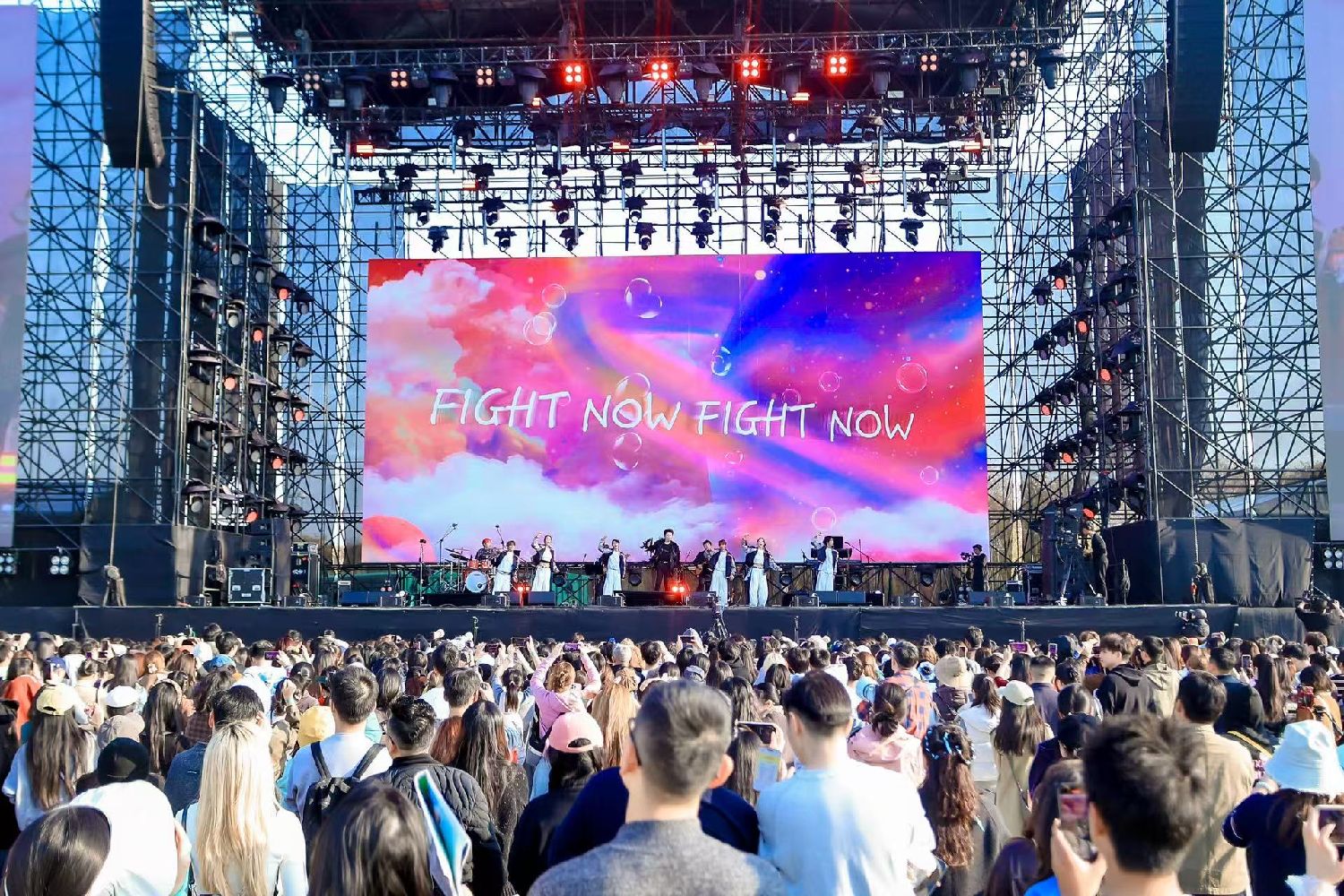
On December 7, the "Shanghai Qiantan Music Festival" opened, marking the debut of Shanghai's first regularly operated large-scale outdoor venue capable of hosting 30,000 to 50,000 people.
This audiovisual feast vividly illustrates Pudong's progress over the past five years as a leading zone in building socialist modernization.
The concept emerged in the summer of 2025: Could Shanghai's central urban area—Qiantan in the former Expo zone—develop a major outdoor performance site rivaling top international and domestic music festivals, accommodating 30,000 to50,000 attendees? Challenges soon followed, including event positioning, traffic management, emergency evacuation, commercial support, operational planning, and stress testing.
"Large-scale outdoor music festivals, especially those routinely hosting tens of thousands of people, are unprecedented in Shanghai's central urban areas. They test the city's comprehensive coordination, commercial operation, and support capabilities," said Zou Xiusong, director of the Cultural Industry Division at the Pudong New District Culture, Sports, and Tourism Bureau.
Feasibility studies, simulations, calculations, and planning progressed simultaneously. Within just one month, Pudong produced a feasibility report. Shortly after, the 230,000-square-meter Qiantan Sports Park began renovations: widening perimeter roads to 10 meters, hardening the main stage area, adding access points to nine entrances and exits, and upgrading power and communication systems.
Transforming blueprints into reality took only three months, filling a long-standing gap in Shanghai's central urban area for a high-standard, large-scale outdoor performance venue.
That day, people from across the country gathered at Qiantan in Pudong, embracing the winter sunshine and immersing in the music atmosphere.
"Attending a major outdoor music festival right in downtown Shanghai—and being able to visit a bistro in the surrounding commercial area after the show—is really enjoyable," said Shen Jie, a festival-goer born in the 2000s.
If the Qiantan Music Festival represents a burst of urban vitality, then the high-quality public services across Pudong form a solid foundation for a fulfilling life.
Li Wei, a worker living in Pudong, has been "commuting by rowing" for over a year. The 6-kilometer water route connects his home in Lianyang Community with his office in Zhangjiang. As a water sports enthusiast, Li Wei admitted that full-day outdoor activities were hard to fit into his busy schedule. After noticing both his home and office were near waterways, he conceived the idea of rowing to work—combining travel, exercise, and relaxation in one.
From his kayak, Li captures the scenic views:mirror-like river surfaces at dawn, skyscrapers gilded by sunset, small bridges adorned with colorful lights at night, and the changing scenery of water corridors through the seasons. Through his social media videos, many netizens have glimpsed Pudong's unique sense of "relaxation."
This "rowing commute" is made possible by Pudong's water corridor initiatives. Over the past five years, the Lujiazui Water Loop project has achieved closure,restoring ecological functions, opening up waterfront walkways, and creating a series of waterscape features including pocket parks, water-dancing bridges, pavilions, and docks.
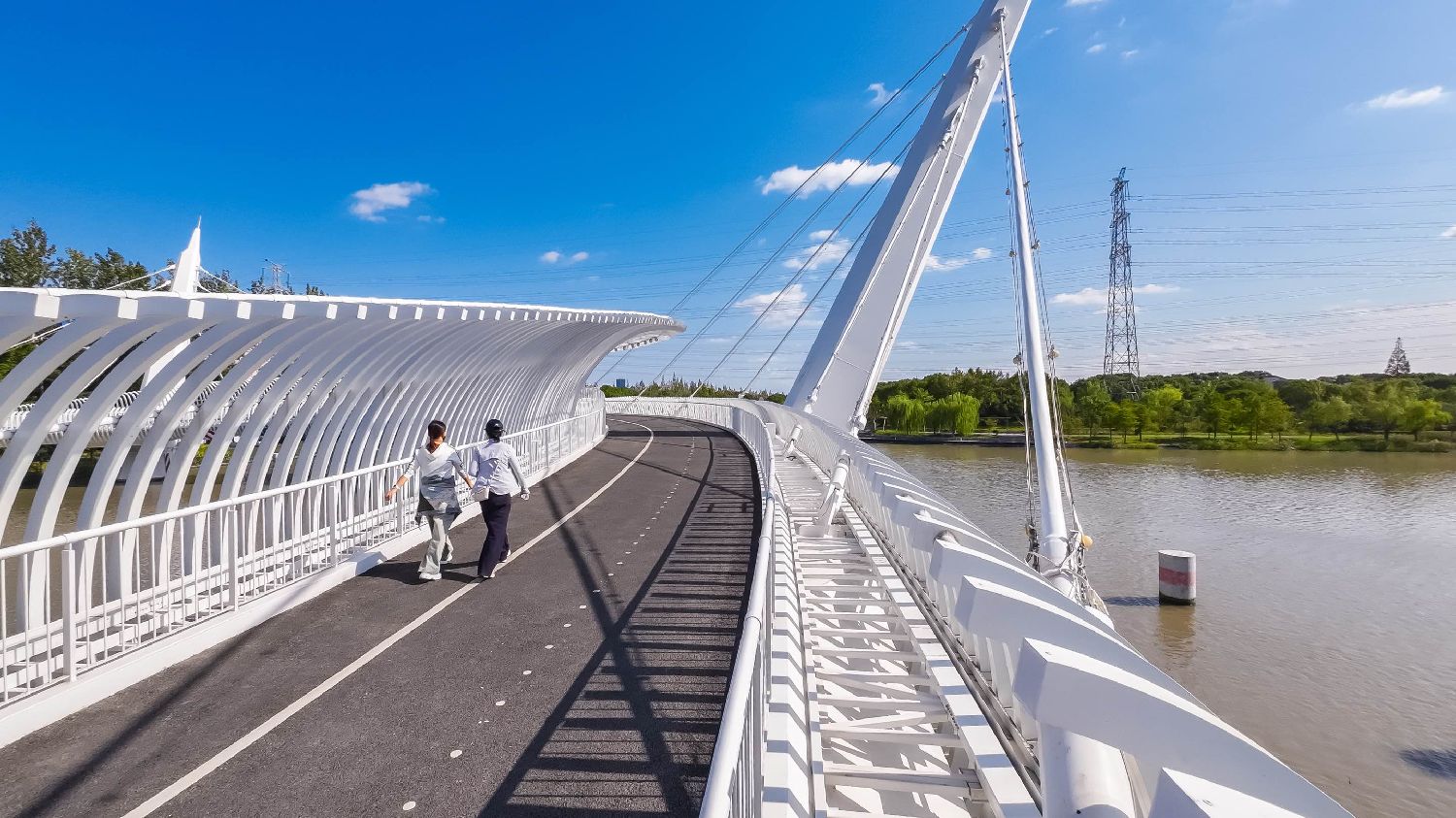
Lujiazui Water Loop (Photo by Zheng Feng)
"As the first completed benchmark among Pudong's 'Five Water Loops,' the Lujiazui Water Loop is upgrading from 'water management' to 'water governance,' bringing the city and its rivers closer," said Yan Jun, Deputy Director of the Huamu subdistrict office in Pudong.
With the Lujiazui Water Loop fully open and the Expo Water Loop under construction, this water-driven transformation is accelerating. Pudong is advancing the "Five Water Loops" people-oriented governance model, covering nearly 200 square kilometers: the refined style of Lujiazui, the local charm of Expo, the tech-inspired Zhangjiang, the convenience-focused Nanpu, and the dynamic Huamu. Once fragmented waterways have become ecological threads weaving through daily life.
Urban warmth is reflected not only in landscapes but also rooted in people's lives.
Official data show that over the past five years,to ensure livable housing, Pudong has built 5.96 million square meters of resettlement housing, supplied 129,000 units of government-subsidized rental housing, and prepared 9,796 beds in "Homes for Urban Builders and Managers." It has also provided 60,000 talent apartments.
To enrich cultural life, facilities such as the Shanghai Museum East Hall, Shanghai Library East Hall, Pudong Art Museum, and Pudong Football Stadium have opened, hosting 24,000 performance events annually.
"In Pudong, scientists, entrepreneurs, innovators, every resident, and every visitor can enjoy a comfortable life, pleasant interactions, and continuous inspiration," said Wu Jincheng, District Governor of Pudong New District.(By Li Shuzheng from CNS)