Copyright as a Key: Opening the “World Showcase” of China’s Hezhe Culture
“As an ethnic culture, it must have its own roots—and those roots lie in its copyright,”said You Jun, vice president of the Heilongjiang Hezhe Ethnic Studies Association and a representative inheritor of the Heilongjiang provincial Intangible Cultural Heritage(ICH) project.
The Hezhe are one of China's oldest ethnic minorities, mainly living along the Songhua, Ussuri, and Heilongjiang rivers in Heilongjiang Province. The Hezhe people boast a rich and colorful traditional culture, best known for their unique world-class intangible cultural heritage, the“Yimakan”storytelling, as well as national intangible cultural heritage fish-skin handicrafts and other folk arts. How, then, can Hezhe culture better "go global"? Recently, China News Service reporters visited Fuyuan City and Tongjiang City in Jiamusi, Heilongjiang Province, where local intangible cultural heritage inheritors are using "copyright" as a key to breathe new vitality into this ancient culture.
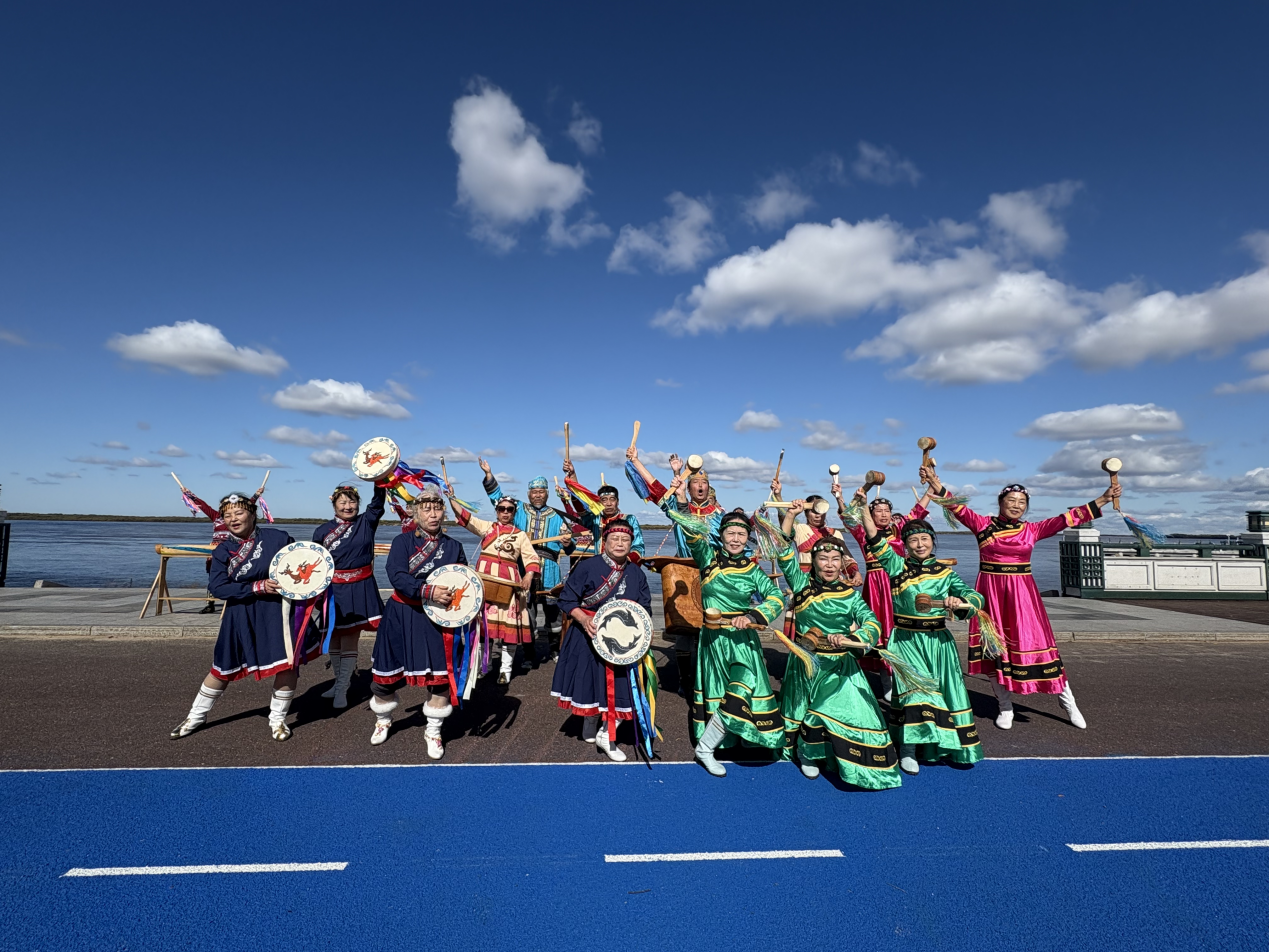
Hezhe ethnic group's musical performance is in rehearsal on the banks of the Heilongjiang River.(Liu Lu)
“This is the Hezhe mouth harp. It used to be something you could only see in a museum, but now it's a popular item in many tourist attractions,”said You Jun at his Hezhe Traditional Culture Studio in Fuyuan City. Now 66 years old, You has been immersed in traditional musical instruments since childhood. Over the past three decades, he has successfully revived more than ten types of nearly lost Hezhe instruments. He also composed Hezhe musical works such as the Jia Ling Kuo(Hezhe's love songs) Wo Bu—Wo Bu Duli Ye(沃不—沃不都里也), filling a gap in China's Hezhe folk instrument repertoire.
With the lively tones of the mouth harp, the melodious "Dujige", and the deep resonance of the fish-skin drum,You Jun stated that copyright protection has made the restoration process no longer a "private endeavor", and the Hezhe melodies are no longer left shelved. In addition to selling instruments, You and his son now plan to blend Hezhe instruments with modern music genres such as rock and rap, bringing ancient tunes like The Wusuli Boat Song to audiences worldwide.
Can fish skin become a craft material? In the studio of Zhao Tonghua—a municipal-level representative inheritor of the Hezhe traditional dyeing of fish-skin craftsmanship, an intangible cultural heritage project—clothes, shoes, and AI-designed refrigerator magnets made of fish skin fill the shelves.“The product has been well received in overseas markets. We've reached preliminary cooperation agreements with companies in Germany, Switzerland, and Canada,”Zhao said. Having learned advanced fish-skin processing techniques from her family since childhood, Zhao explained that innovations in preservation and dyeing technology have given fish-skin crafts new life. Now, all products are protected by independent copyrights—a move that not only boosts their collectible value but also lays a solid legal foundation for expanding into global markets.
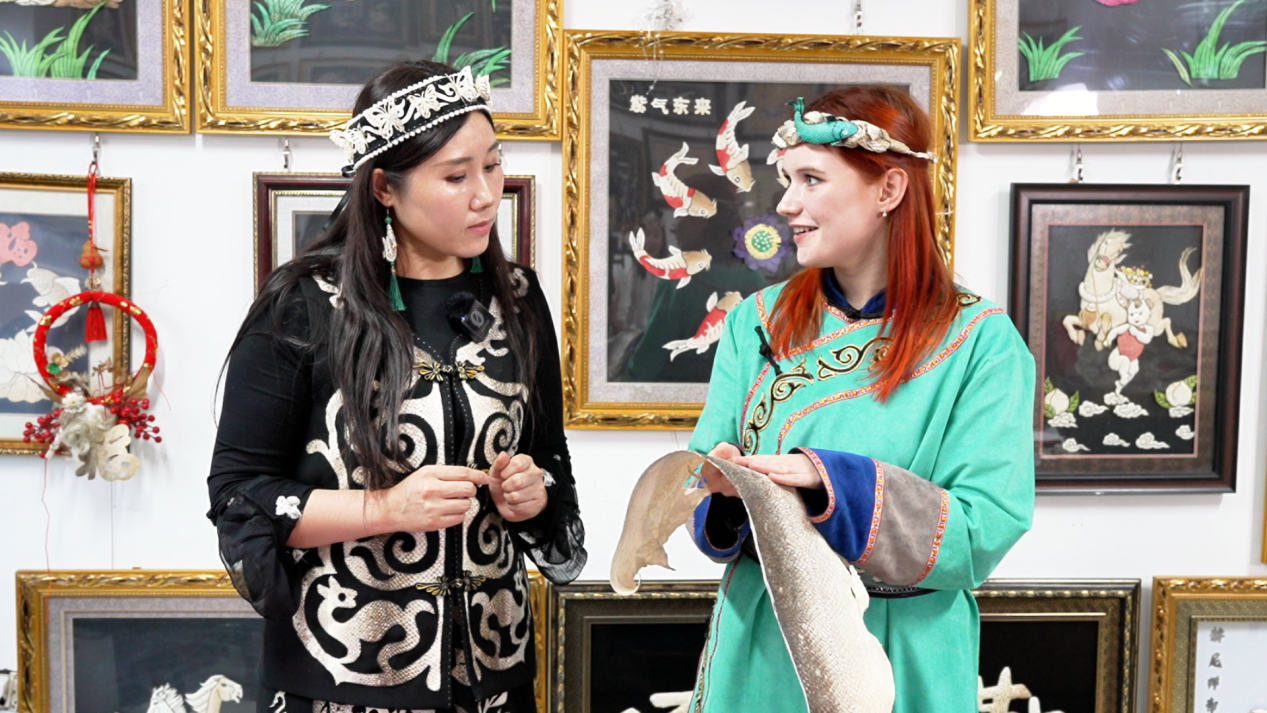
In Tongjiang City,Zhao Tonghua teaches Russian student Mei Li to make fish skin paintings. (Yu Kun)
Since Jiamusi City was designated a national pilot zone for the protection and promotion of folk art copyrights in 2022, more than 3,600 folk art works—including the renowned fish-skin paintings—have been created, and over 2,000 copyright registrations completed. The city has established ten copyright service stations, continuously refined the process of copyright transformation and application, expanded brand licensing to cover patterns and designs, and reached cooperation intentions with over twenty domestic and overseas brands.
“Based on the folk stories of the Hezhe people, we've created the 'Hezhe Divine Figurine' IP and the 'Figurine's Coming' cultural and creative industry chain, covering multiple fields such as urban construction, trendy toys, and beverages. Through a development model of 'ICH+copyright+cultural creativity+the Internet,' cultural IPs are being effectively transformed into economic benefits.”said Guo Lin, head of the Tongjiang Creative Design Zone and provincial representative inheritor of Hezhe sand pottery craftsmanship.
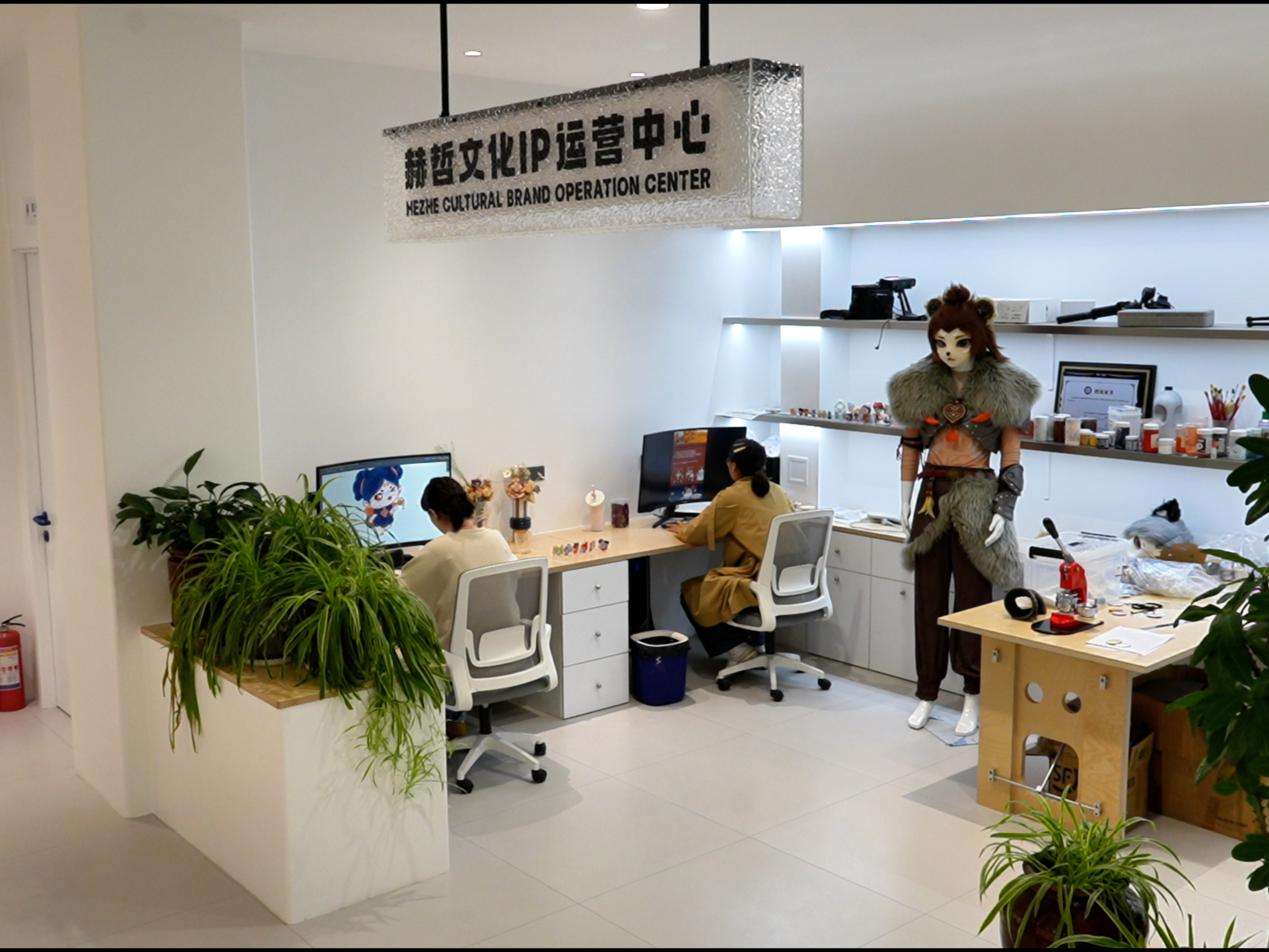
In Tongjiang Creative Design Zone, the staff of the Hezhe Cultural Brand Operation Center are engaged in the creation of works. (Yu Kun)
At present, the design park has built a diversified interactive space integrating the experience of Hezhe people's sand pottery, cultural and creative tea houses, and a cultural brand operation center— allowing consumers to experience the charm of Hezhe culture in immersive ways.
Guo Lin stated that intangible cultural heritage not only holds significant value for its preservation and inheritance, but also requires exploring its practical significance for daily life, making it a cultural resource that is needed and utilized by people. In the next step, the park plans to launch a "Figurine's Coming" themed animation exhibition and a distinctive hotel, and will leverage international exchange platforms such as the"China-Russia Border Cultural Season"to further promote the Hezhe culture onto the global stage.